Subsurface drainage
French Drain Installation in Houston
A Houston French drain should do more than hide water underground. We plan the grade, outlet, pipe, stone, and soil separation as one complete collect-and-convey system.
Estimate my projectDesigned for Houston conditions
The right system starts with the water path.
Intercept subsurface water and carry it to a deliberate outlet—not another low spot in the yard. Every recommendation begins with where the water starts, how it crosses the property, and where it can safely finish.
How we approach it
- 01
Read the grade and trace the water source
- 02
Plan a lawful gravity or pumped outlet
- 03
Excavate, line, pipe, stone, wrap, and restore
Done right vs. done wrong
Why some drainage jobs fail within a year.
Pipe laid flat or with dips that hold water
Continuous fall checked with a level along the full run
Gravel placed directly against clay with no fabric
Non-woven geotextile keeps fine clay out of the stone
Drain ends in another low spot or has no outlet
A planned gravity outlet or designed pump discharge
Built from the soil up
A drain that keeps flowing
Fabric separates fine clay from the drainage stone. Open-graded rock creates storage space, while the sloped perforated pipe carries collected water to a defined outlet.
Underground drain installation
Underground drain installation in Houston, Conroe, and The Woodlands
Looking for underground drain installation? A French drain is the underground system most Houston yards need. It collects water below the surface and carries it to a safe outlet. When surface or roof water is the problem, we pair it with solid underground pipe from catch basins and downspouts.
Perforated vs. solid underground pipe
Perforated pipe in gravel and fabric collects groundwater. Solid PVC carries collected water to the outlet without leaking it back into the soil. Using the wrong pipe in the wrong place is one of the most common reasons underground drains fail in Houston clay.
Built for Gulf Coast clay
Dense gumbo clay drains slowly and smears when it's trenched wet. We check the slope along the full run, line the trench with fabric so clay stays out of the stone, and plan cleanouts so the line can be serviced later.
Underground drain installation near you
We install French drains and underground drainage lines across Greater Houston.
- Underground drain installation in Katy, TX: side-yard ponding and roof runoff concentrated between neighboring homes
- Underground drain installation in Cypress, TX: backyard low spots, fence-line runoff, and long conveyance routes
- Underground drain installation in The Woodlands, TX: drainage routes that respect roots, beds, and established outdoor spaces
- Underground drain installation in Conroe, TX: slope runoff and erosion control with dependable downhill outlets
- Underground drain installation in Magnolia, TX: long French-drain runs through tree lines and waterlogged back lawns
- Underground drain installation in Humble, TX: standing water between homes and reliable gravity discharge points
- Underground drain installation in Spring, TX: erosion paths, soggy side yards, and coordinated surface collection
FAQ
Underground drain and French drain questions
Is a French drain the same as an underground drain?
A French drain is one type of underground drain. It uses perforated pipe in washed gravel, wrapped in geotextile fabric, to collect water that soaks into the soil. Other underground drains use solid pipe to carry water from catch basins or downspouts. Many Houston yards need both.
What pipe do you use for underground drain installation?
Perforated pipe collects groundwater inside a French drain. Solid PVC or smooth-wall pipe carries surface and roof water to the outlet without leaking it back into the soil. We choose the pipe for each run based on what it needs to do.
How deep is an underground yard drain in Houston clay?
Most residential yard drains are shallow trenches, often in the range of 12 to 24 inches. The right depth depends on the grade, the water source, and where the line can drain. We confirm depth and slope on site.
Where does the water go?
Every underground drain needs a planned outlet: a curb, street, swale, or another discharge point that suits the property and local rules. If there is no gravity outlet, a pump discharge may be an option. A drain that ends in another low spot isn't finished.
Do you install underground drains outside Houston?
Yes. We serve homes across Greater Houston, including Katy, Cypress, The Woodlands, Conroe, Magnolia, Humble, and Spring.
Installation references
See what the working parts look like.
Representative examples help identify the materials and methods discussed during an inspection.
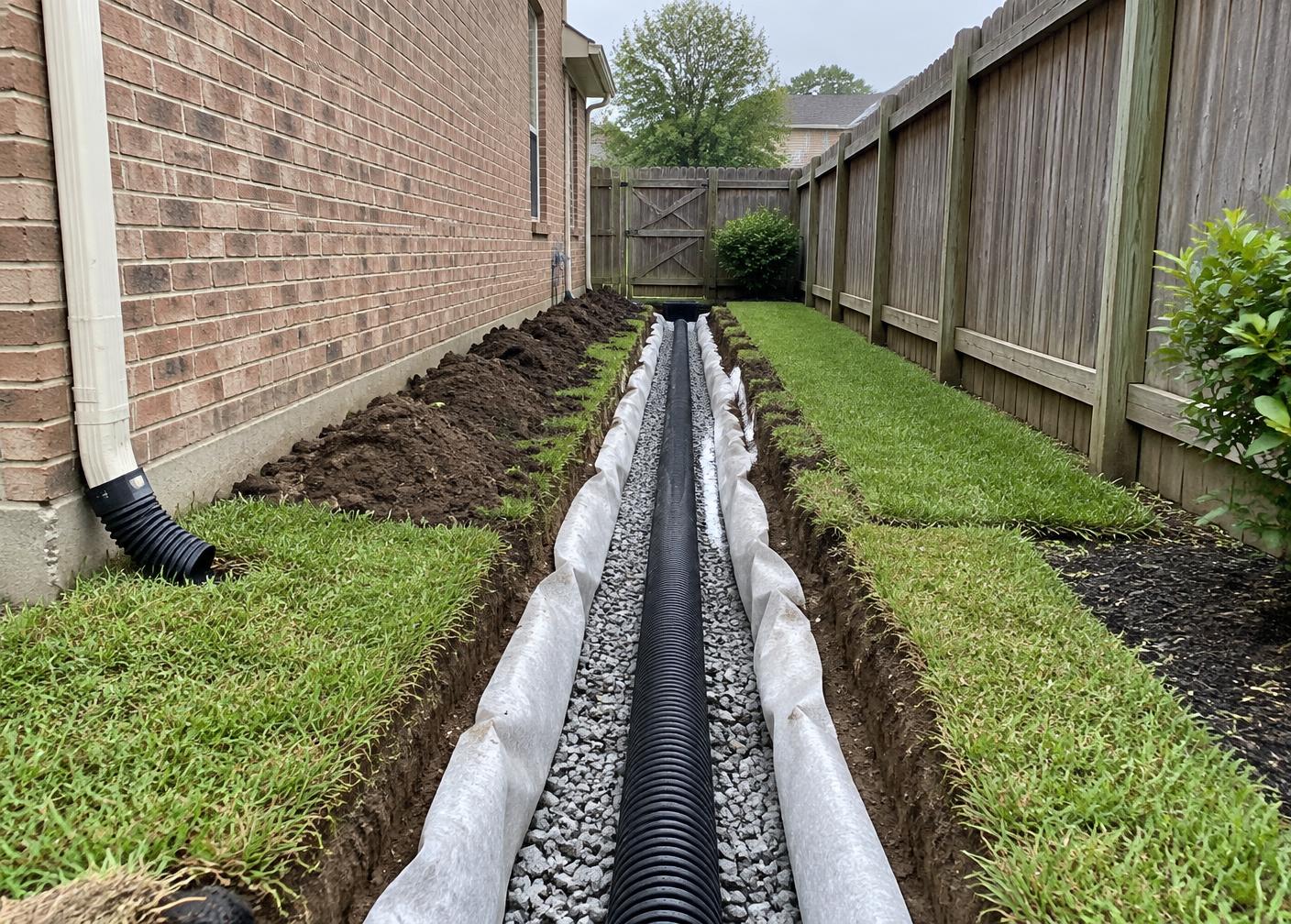
French drain assembly
Fabric, washed stone, and perforated pipe before the trench is wrapped and restored.
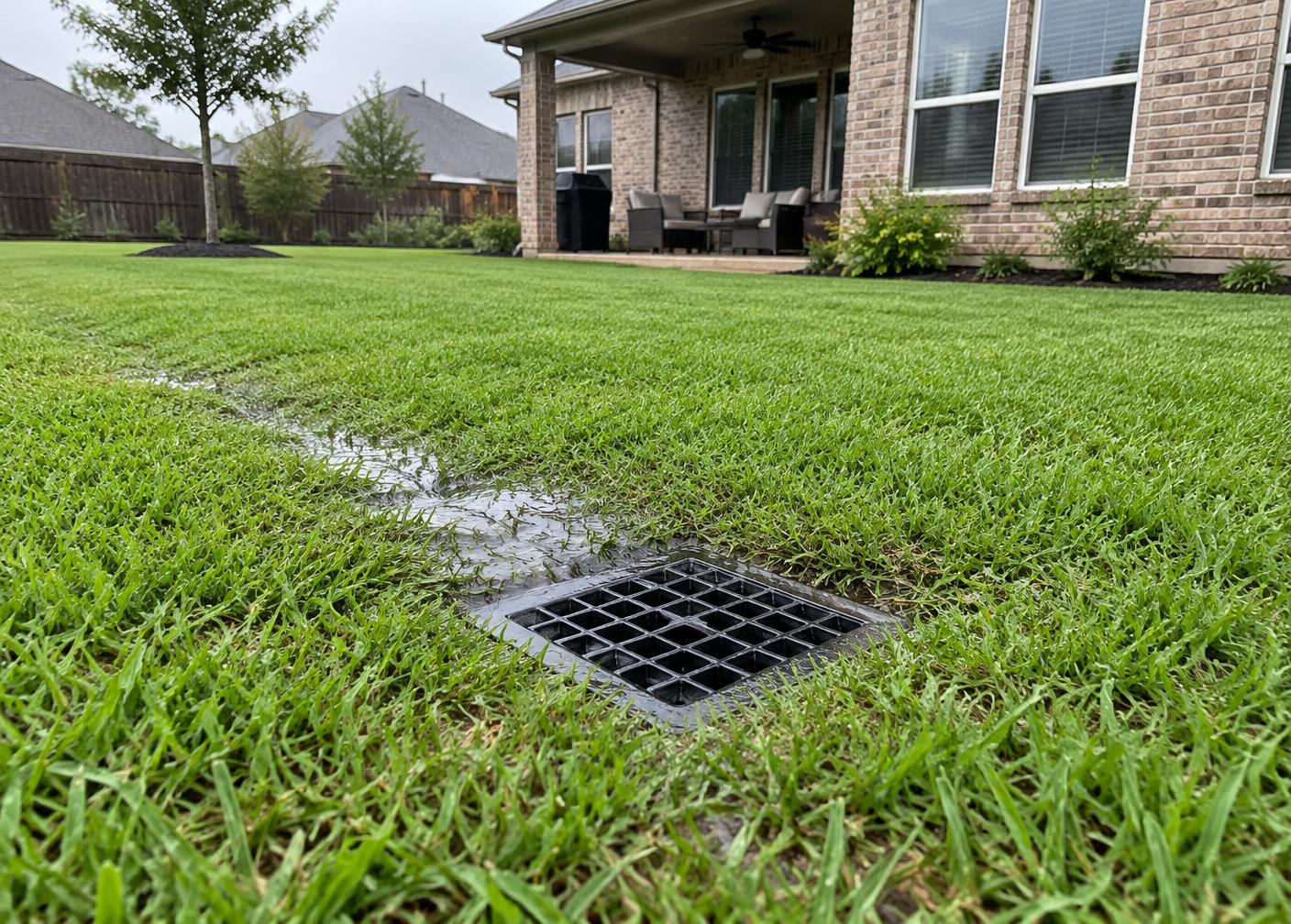
Surface-water collection
A catch basin set at a lawn low point to collect runoff before it spreads.
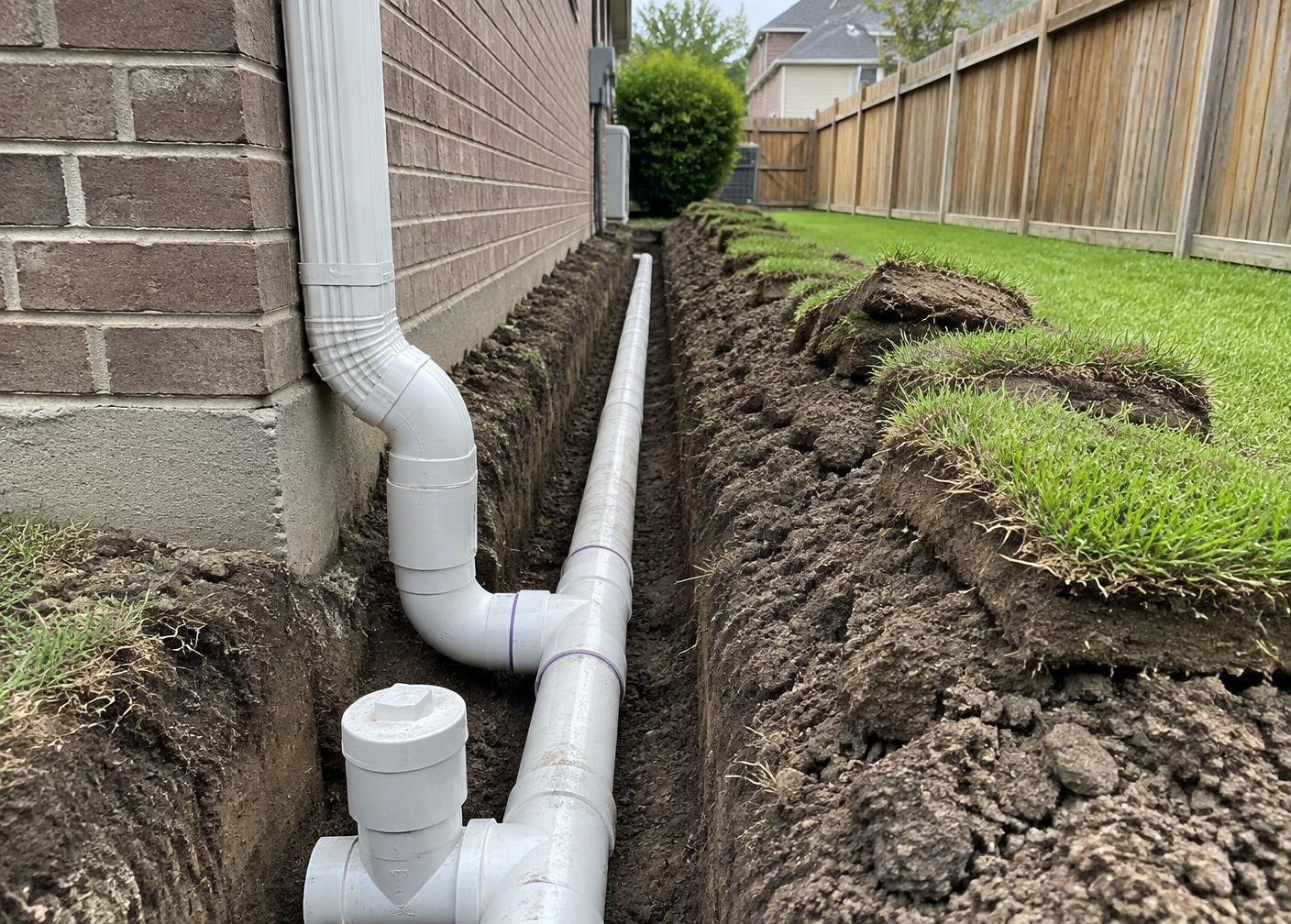
Buried downspout line
Solid pipe carries concentrated roof water away from the slab toward a planned outlet.
Representative installation imagery; each property requires its own layout, materials, and outlet plan.
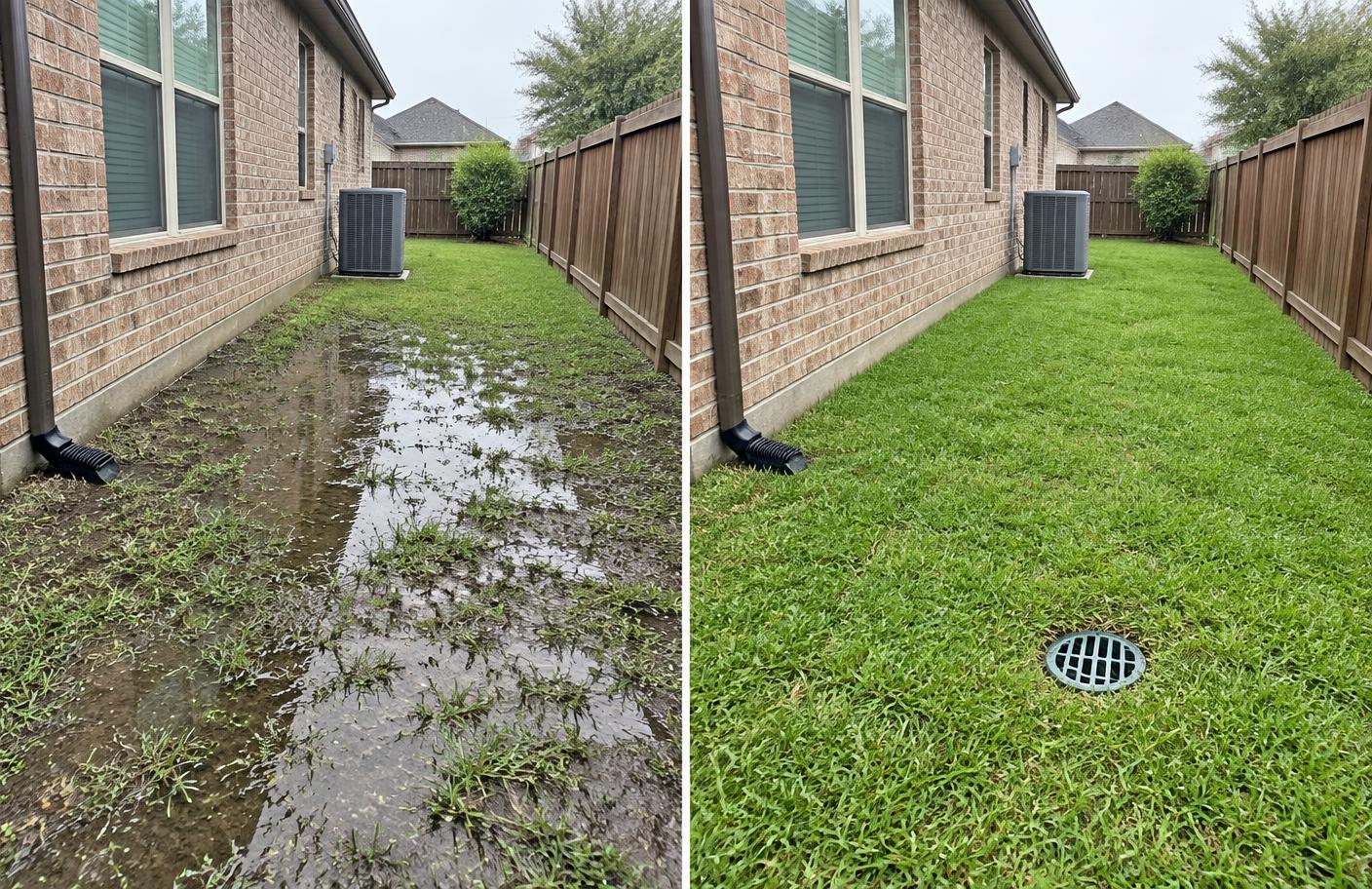
Representative project
From standing water to a usable side yard.
A low side yard can combine roof runoff, neighboring flow, and compacted clay. The solution may pair surface collection with subsurface conveyance rather than relying on one component alone.
Illustrative project example; actual outcomes and scope vary by property.
A drier yard starts here
Plan your french drains project
Start with a no-pressure drainage inspection and a plan built around your property’s actual grade and outlet.