Roof-runoff control
Gutter Downspout Extensions in Houston
One downspout can release hundreds of gallons beside a home during a strong storm. A buried extension routes that flow toward a suitable discharge point while keeping the yard usable.
Estimate my projectDesigned for Houston conditions
The right system starts with the water path.
Move concentrated roof water away from the slab through a closed, buried drainage line. Every recommendation begins with where the water starts, how it crosses the property, and where it can safely finish.
How we approach it
- 01
Inspect gutters and downspout locations
- 02
Map a separate solid-pipe route
- 03
Connect, pressure-test, and restore
Done right vs. done wrong
Why some drainage jobs fail within a year.
Perforated pipe that leaks roof water back by the slab
Solid pipe carries roof water all the way to the outlet
Downspouts tied into a French drain line
Separate lines so roof surges don't overload subsurface drains
Thin corrugated pipe crushed under the lawn
Durable pipe with cleanouts for future maintenance
Installation references
See what the working parts look like.
Representative examples help identify the materials and methods discussed during an inspection.
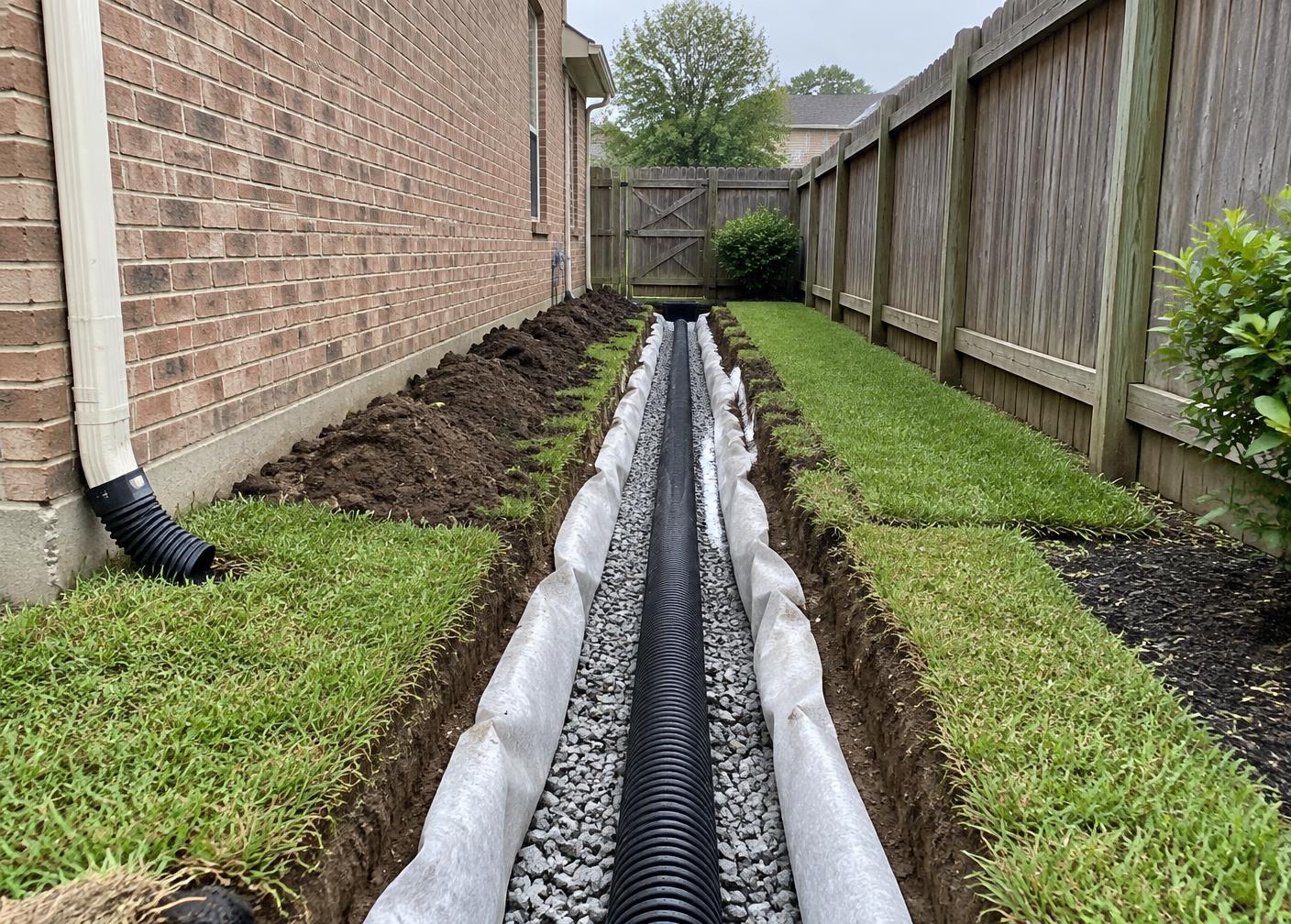
French drain assembly
Fabric, washed stone, and perforated pipe before the trench is wrapped and restored.
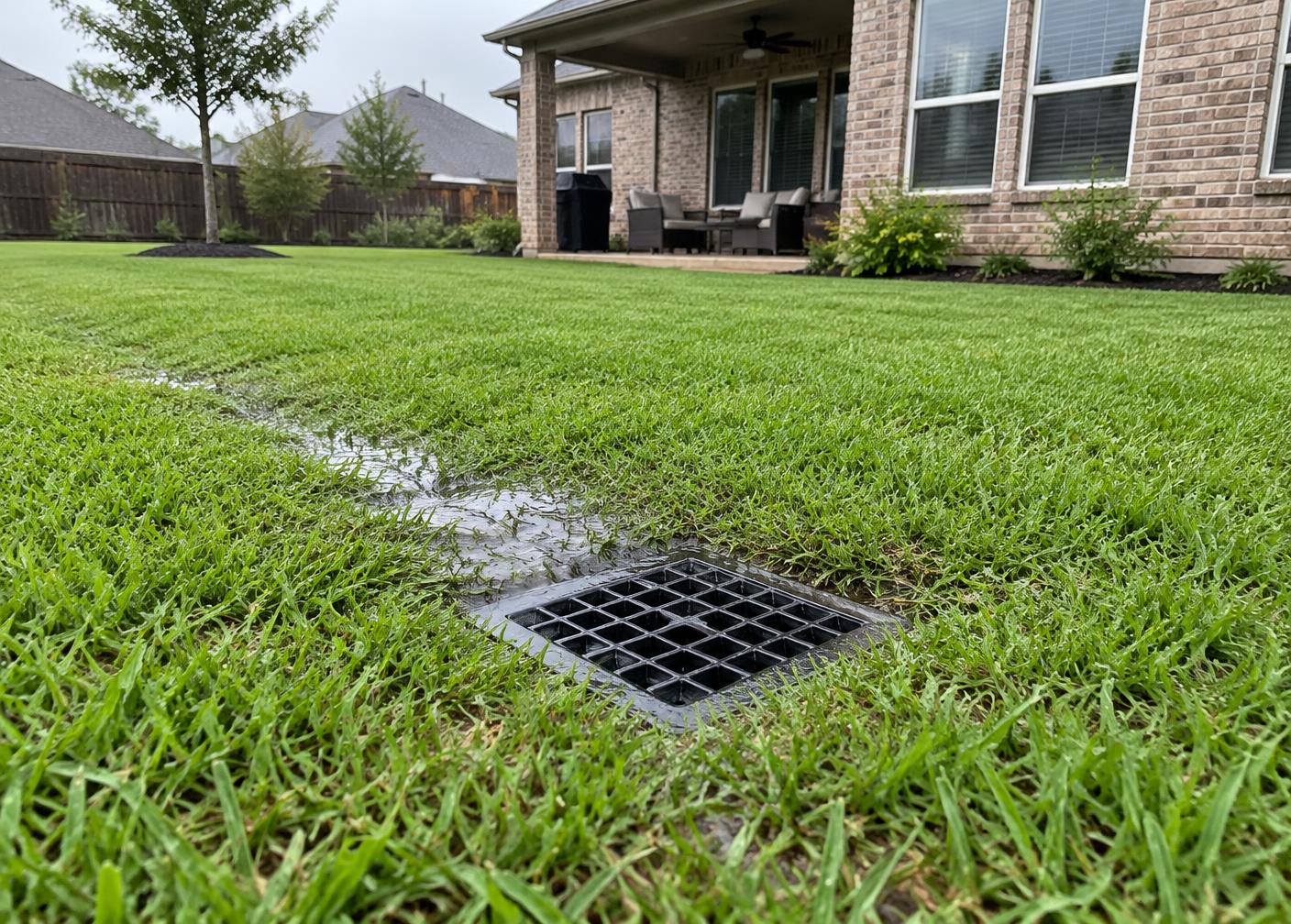
Surface-water collection
A catch basin set at a lawn low point to collect runoff before it spreads.
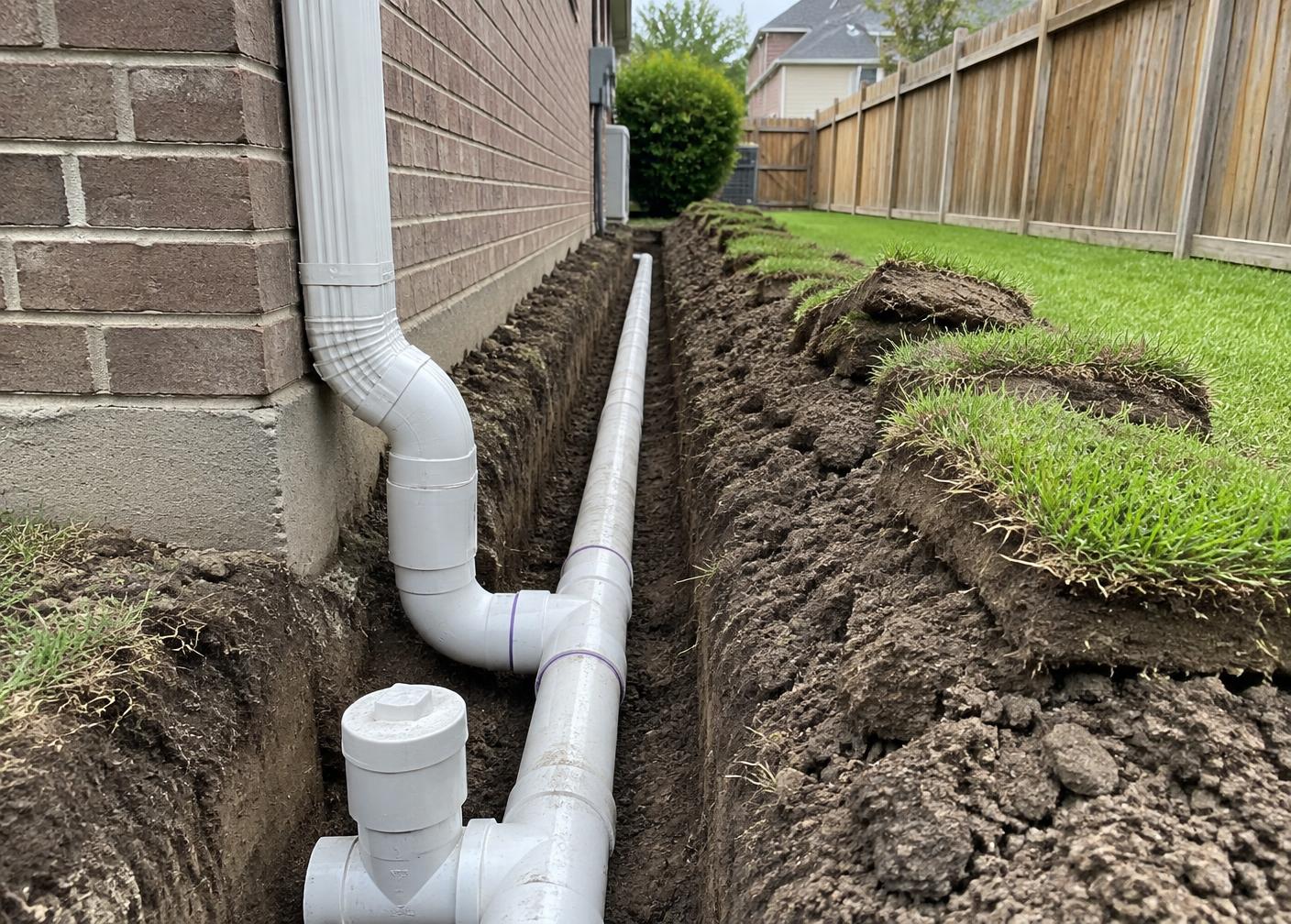
Buried downspout line
Solid pipe carries concentrated roof water away from the slab toward a planned outlet.
Representative installation imagery; each property requires its own layout, materials, and outlet plan.
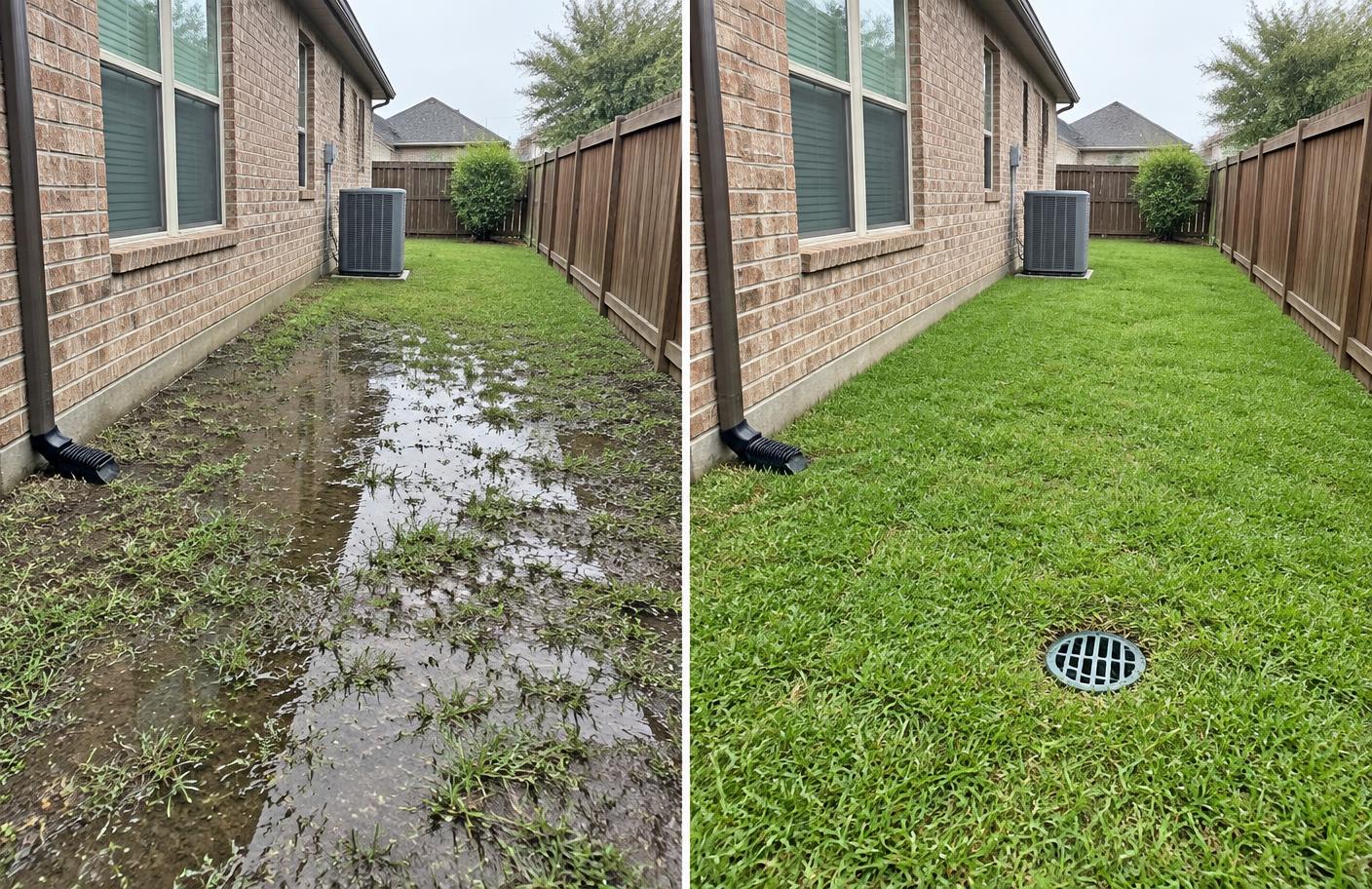
Representative project
From standing water to a usable side yard.
A low side yard can combine roof runoff, neighboring flow, and compacted clay. The solution may pair surface collection with subsurface conveyance rather than relying on one component alone.
Illustrative project example; actual outcomes and scope vary by property.
A drier yard starts here
Plan your buried downspouts project
Start with a no-pressure drainage inspection and a plan built around your property’s actual grade and outlet.